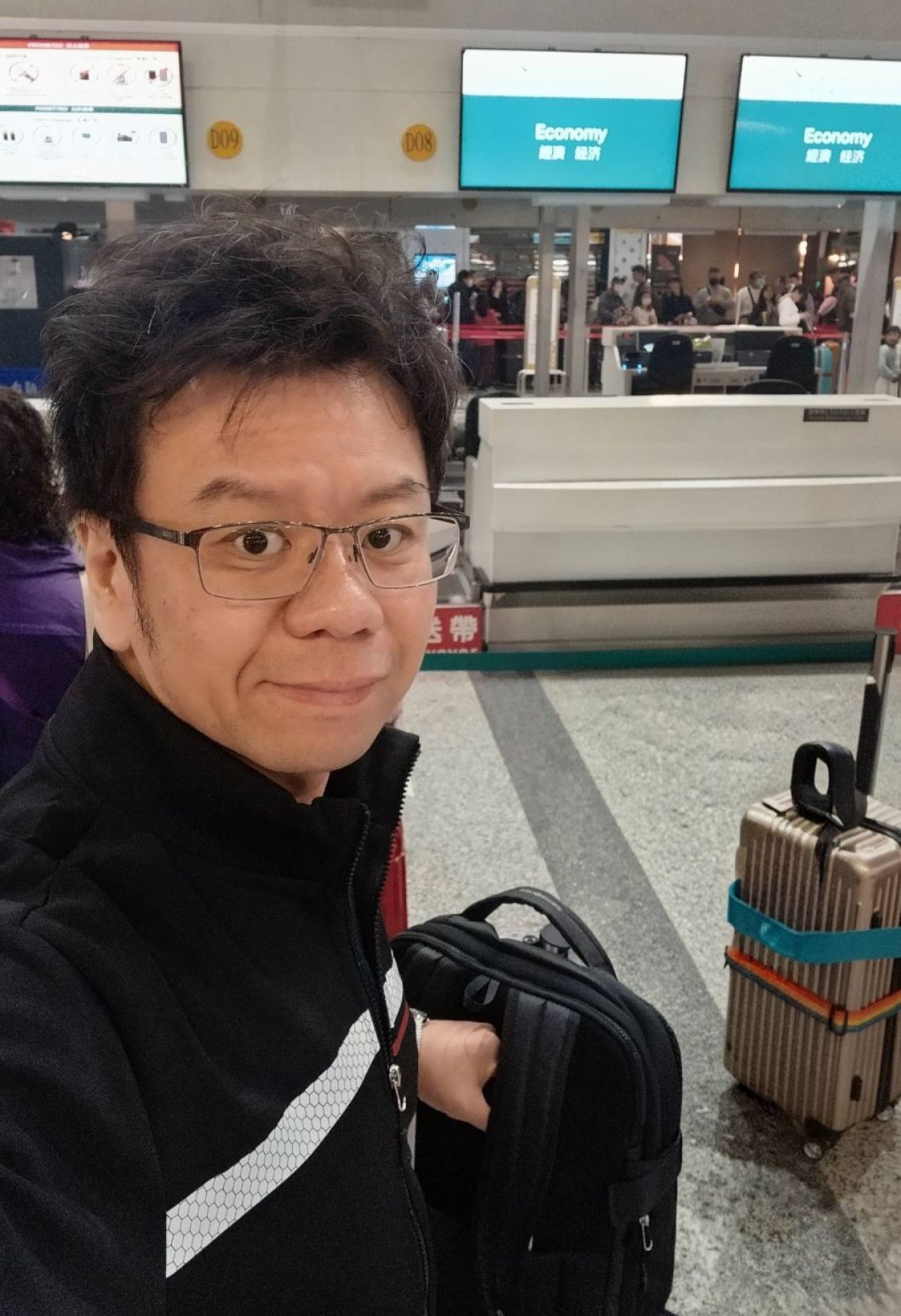
Cheung, Chun Hei Antonio
Name
Cheung, Chun Hei Antonio
Title
Professor
TEL
886-6 235-3535 ext 5483 / 5489
FAX
886-6 274-9296
|
Education |
|
|---|---|
|
2007 |
Ph.D, Molecular Medicine, The University of Auckland, New Zealand |
|
2001 |
B.Tech with First Class Honours, Biomedical science, The University of Auckland, New Zealand |
|
Research Interests |
|
|---|---|
|
・ |
Cancer cells exhibit remarkable adaptability, using diverse mechanisms to resist therapy, evade immune surveillance, and repair damaged DNA. My laboratory is dedicated to dissecting these core survival strategies to develop next-generation precision oncology therapeutics. A central pillar of our research explores the regulatory interplay between the anti-apoptotic protein BIRC5/Survivin and Autophagy. Our findings reveal that autophagy is a double-edged sword. Under specific stress conditions, it triggers DNA damage and genomic instability, thereby driving tumor evolution and chemoresistance. In parallel, we are engineering novel IDO1-targeting agents designed to counteract tumor-induced immunosuppression and inhibit drug efflux pumps, thereby rearming the immune system and overcoming multidrug resistance. Ultimately, we integrate these mechanistic insights with cancer nanotechnology to construct nanomedicines that deliver targeted therapies directly to hard-to-treat malignancies. |
|
Awards |
|
|---|---|
|
・ |
2026 - Elected Fellow, FIBMS (Institute of Biomedical Science, United Kingdom) 2025 - Excellent Mentor Award (The College of Medicine, NCKU) 2024 - Distinguished Teaching (EMI) Award (NCKU) 2023 - Elected Fellow, FRSB (The Royal Society of Biology, United Kingdom) 2023 - Professor Chen-Yuan Lee Memorial Outstanding Research Award (The Pharmacological Society in Taiwan) 2023 - Excellent Research Paper Award (Cheng-Hsing Medical and Educational Foundation) 2022 - Distinguished Teaching (EMI) Award (NCKU) 2021 - Ta-You Wu Memorial Award (National Science and Technology Research Council, Taiwan) 2020 - Excellent Mentor Award (The School of Medicine, NCKU) 2019 - Outstanding Teaching Award (NCKU) 2017 - Network Award (Korean Society for Biochemistry and Molecular Biology, Korea) 2017 - Innovative Teaching Award (The College of Medicine, NCKU) 2016 - Excellent Research Paper Award (Cheng-Hsing Medical and Educational Foundation) 2016 - Distinguished Teaching Award (NCKU) 2015 - Innovative Teaching Award (The College of Medicine, NCKU) 2013 - Career Development Grant (CDG) Awardee (National Health Research Institutes, Taiwan) |
|
Selected Publications |
|
|---|---|
|