
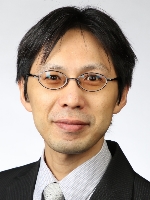
Kwang-Yu Chang
Name
Kwang-Yu Chang
Title
Associate Professor
TEL
886-6 235-3535 ext 5328 / 5306
FAX
886-6 274-9296
|
Profile |
|---|
|
Dr. Kwang-Yu Chang is the Associate Professor and the Attending Physician of Pharmacology and Oncology at the College of Medicine, National Cheng Kung University. He is also the Joint Appointed Associate Investigator at the National Institute of Cancer Research, National Health Research Institutes. Dr. Chang earned his MD from Kaohsiung Medical University, PhD in Graduate Institute of Clinical Medicine from National Cheng Kung University, and he also completed his residency in National Cheng Kung University Hospital. From 2014 to 2016, Dr. Chang trained as a Postdoctoral Fellow at Johns Hopkins School of Medicine. His research centers on medical oncology, tumor biology, tumor immunology, signal transduction, anti-cancer drug development, and early phase clinical trials, with a translational focus on therapeutic resistance and metastasis in head and neck squamous cell carcinoma and brain tumor. He has extensively studied the EGFR–PI3K–AKT pathway, cancer stemness, and more recently, the tumor microenvironment. He has published over 60 peer-reviewed articles in leading journals, including Clinical Cancer Research, Redox Biology, Journal of Experimental and Clinical Cancer Research, and Journal of Biomedical Science. His work has been recognized with awards such as the Poster Prize from the Taiwan Society of Internal Medicine. |
|
Research Areas and Achievements |
|---|
|
Glioblastoma Glioblastoma inevitably progresses with poor survival, as the blood-brain barrier hampers drug penetration. By analyzing the genetic and protein landscapes of GBM, Dr. Chang’s study reveals how these molecular drivers shape a complex tumor ecosystem. These immune and metabolic interactions exacerbate the disease while creating specific niches for targeted therapy. |
|
Head and neck cancer Head and neck cancer frequently presents as a locally aggressive disease tied to carcinogen exposure. Through integrated molecular profiling, Dr. Chang’s research elucidates the therapeutic potential of dual PI3K/mTOR inhibition within the tumor landscape. By uncovering how cathepsin-regulated interleukin-7 secretion drives immune evasion, this work defines the biological framework necessary for developing more effective, niche-specific therapies. |
|
Clinical trials Beyond basic biology, Dr. Chang’s work evaluates investigational therapeutic concepts within early-phase clinical trials. He has assessed the efficacy of cetuximab-based sequential regimens combined with radiotherapy and chemotherapy to improve outcomes in locally advanced oral squamous cell carcinoma. Additionally, Dr. Chang’s research explores synergistic strategies in the tumor microenvironment, including the combination of the arginine-depriving agent ADI-PEG 20 with pembrolizumab in solid tumors, and the integration of Rituximab, Acalabrutinib, and Durvalumab for Primary Central Nervous System Lymphoma. These studies aim to bridge the gap between metabolic or targeted interventions and robust clinical responses. |
|
Publications since 2022 |
|
|---|---|
|
Reasearch article: |
|
|
1. |
Chang KY, Hsu YT, Chuang SS, Hsiao CF, Huang TC, Hsieh CY, Yeh SP, Ma WL, Wang MC, Chen TY, Hsueh PR, Wu SJ. Rituximab, Acalabrutinib, and Durvalumab for Primary Central Nervous System Lymphoma: A Single-arm, Phase 1b, Multi-center Study. Clinical Cancer Research. 2026 Apr 22. Online ahead of print. doi: 10.1158/1078-0432.CCR-25-3675.(First Author) |
|
2. |
Hsueh WT, Chang KY, Tsai CC, Chen KT, Hong ZX, Liu CC, Chu JM, Qiu LY, Lan YY, Chien CH. Revealing the roles of the SH3GLB1/hydrogen peroxide axis in glioblastoma multiforme cells. Oncology Reports. 2026 Jan 19;34(2):15. doi: 10.32604/or.2025.071258.(Co-First Author) |
|
3. |
Shen SJ, Chen HC, Lin CL, Thakur A, Onuku R, Chen IC, Li HY, Chang KY, Chuang JY, Yang WB, Lin HY, Shen YR, Liou JP, Chang WC, Hsu TI. Contribution of Prostaglandin E2-Induced Neuronal Excitation to Drug Resistance in Glioblastoma Countered by a Novel Blood-Brain Barrier Crossing Celecoxib Derivative. Advanced Science. 2025 Oct;12(38):e06336. doi: 10.1002/advs.202506336. |
|
4. |
Hsueh WT, Chang KY, Chuang JY, Liu MS, Chung PH, Chu JM, Chien CH. SOD2-mediated TMZ-resistant Glioblastoma Cells Exhibit Cross-resistance to Irradiation. Anticancer Research. 2025 Sep;45(9):3711–3718.(Co-First Author) |
|
5. |
Taheri Baghmisheh S, Chen CH, Yeh YM, Lin PC, Chen PC, Chan RH, Kang JW, Lee CT, Tsai HJ, Fang YC, Cheung CHA, Chang KY, Chang JY, Chen SH. Cathepsin S regulates antitumor immunity through autophagic degradation of PD-L1 in colorectal cancer cells. Cancer Immunology, Immunotherapy. 2025 Aug;74(9):287. doi: 10.1007/s00262-025-04140-x. |
|
6. |
Peng HY, Chang KY, Chang WM, Wu CY, Lee HL, Chang YC, Liu KJ, Shiah SG, Kuo CC, Chang JY. EGFRvIII-driven microenvironmental fibroblast activation and transformation accelerate oral cancer progression via lipocalin-2/STAT3 axis. Neoplasia. 2025 Aug;66:101193. doi: 10.1016/j.neo.2025.101193. |
|
7. |
Chang YC, Chen SJ, Chen SH, Hsiao SY, Chen LH, Chen CH, Liu CC, Chen YW, Liu KJ, Wu SY, Chu JM, Qiu LY, Chiang WF, Hsieh HP, Hsueh WY, Hsiao JR, Shen MR, Chang JY*, Chang KY*. Unraveling Cathepsin S regulation in interleukin-7-mediated anti-tumor immunity reveals its targeting potential against oral cancer. Journal of Biomedical Science. 2025 Jul;32(1):69. doi: 10.1186/s12929-025-01154-6.(Corresponding Author) |
|
8. |
Chiang NJ, Bai LY, Ho IW, Hsu CH, Liang YH, Chiu CF, Lin CC, Chang KY, Chen SH, Tsai HJ, Lin YP, Chen LT, Lin CC. A phase I study of liposomal Irinotecan(ONIVYDE®)in combination with TAS-102(LONSURF®)in refractory solid tumors. Investigational New Drugs. 2025 Jun;43(3):709–718. doi: 10.1007/s10637-025-01547-2. |
|
9. |
Chang YH, Chang KY, Li CH, Chen PL, McGrath JA, Hsu CK. Delayed diagnosis of tuberous sclerosis complex: unveiling low-level TSC2 mosaicism using targeted next-generation sequencing. Clinical and Experimental Dermatology. 2024 Dec;50(1):243–245. doi: 10.1093/ced/llae253. |
|
10. |
Wu CY, Chen Y, Lin YJ, Wei KC, Chang KY, Feng LY, Chen KT, Li G, Ren AL, Nitta RT, Wu JY, Cho KB, Pant A, Choi J, Mackall CL, Kim LH, Wu AC, Chuang JY, Huang CY, Jackson CM, Chen PY, Lim M. Tumor-Associated Microglia Secrete Extracellular ATP to Support Glioblastoma Progression. Cancer Research. 2024 Dec;84(23):4017–4030. doi: 10.1158/0008-5472.CAN-24-0018. |
|
11. |
Yu H, Nishio H, Barbi J, Mitchell-Flack M, Vignali PDA, Zheng Y, Lebid A, Chang KY, Fu J, Higgins M, Huang CT, Zhang X, Li Z, Blosser L, Tam A, Drake C, Pardoll D. Neurotrophic factor Neuritin modulates T cell electrical and metabolic state for the balance of tolerance and immunity. eLife. 2024 Nov;13:RP96812. doi: 10.7554/eLife.96812. |
|
12. |
Liu CC, Yang WB, Chien CH, Wu CL, Chuang JY, Chen PY, Chu JM, Cheng SM, Qiu LY, Chang YC, Hwang DY, Huang CY, Lee JS, Chang KY*. CXCR7 activation evokes the anti-PD-L1 antibody against glioblastoma by remodeling CXCL12-mediated immunity. Cell Death & Disease. 2024 Jun;15(6):434. doi: 10.1038/s41419-024-06784-6.(Corresponding Author) |
|
13. |
Wong CE, Chang Y, Huang CC, Hsu HH, Lai YH, Chang KY, Huang CY, Wang LC, Lee JS, Lee PH. Surgical excision and radiotherapy for brain metastasis from colorectal cancer: How frailty and comorbidity indices influence outcome. Kaohsiung Journal of Medical Sciences. 2024 Apr;40(4):395–403. doi: 10.1002/kjm2.12815. |
|
14. |
Yang SJ, Chang ST, Chang KC, Lin BW, Chang KY, Liu YW, Lai MD, Hung LY. Neutralizing IL-16 enhances the efficacy of targeting Aurora-A therapy in colorectal cancer with high lymphocyte infiltration through restoring anti-tumor immunity. Cell Death & Disease. 2024 Jan;15(1):103. doi: 10.1038/s41419-023-06381-z. |
|
15. |
Chien CH, Lai CC, Chuang JY, Chu JM, Liu CC, Chang KY*. Role of SH3GLB1 in the Regulation of CD133 expression in GBM Cells. BMC Cancer. 2023 Jul;23(1):713. doi: 10.1186/s12885-023-11211-8.(Corresponding Author) |
|
16. |
Ye PH, Li CY, Cheng HY, Anuraga G, Wang CY, Chen FW, Yang SJ, Lee KT, Chang KY*, Lai MD*. A novel combination therapy of arginine deiminase and an arginase inhibitor targeting arginine metabolism in the tumor and immune microenvironment. American Journal of Cancer Research. 2023 May;13(5):1952–1969.(Co-Corresponding Author) |
|
17. |
Chien CH, Yang WB, Chuang JY, Lee JS, Liao WA, Huang CY, Chen PY, Wu AC, Yang ST, Lai CC, Chi PI, Chu JM, Cheng SM, Liu CC, Hwang DY, Chen SH, Chang KY*. SH3GLB1-related autophagy mediates mitochondrial metabolism to acquire resistance against temozolomide in glioblastoma. Journal of Experimental & Clinical Cancer Research. 2022 Jul;41(1):220. doi: 10.1186/s13046-022-02429-8.(Corresponding Author) |
|
18. |
Tsai YT, Lo WL, Chen PY, Ko CY, Chuang JY, Kao TJ, Yang WB, Chang KY, Hung CY, Kikkawa U, Chang WC, Hsu TI. Reprogramming of arachidonate metabolism confers temozolomide resistance to glioblastoma through enhancing mitochondrial activity in fatty acid oxidation. Journal of Biomedical Science. 2022 Mar;29(1):21. doi: 10.1186/s12929-022-00804-3. |
|
19. |
Wu AC, Yang WB, Chang KY, Lee JS, Liou JP, Su RY, Cheng SM, Hwang DY, Kikkawa U, Hsu TI, Wang CY, Chang WC, Chen PY, Chuang JY. HDAC6 involves in regulating the lncRNA-microRNA-mRNA network to promote the proliferation of glioblastoma. Journal of Experimental & Clinical Cancer Research. 2022 Feb;41(1):47. doi: 10.1186/s13046-022-02257-w. |
|
Review article: |
|
|
1. |
Chen HC, Chang WC, Chuang JY, Chang KY, Liou JP, Hsu TI. The complex role of eicosanoids in the brain: Implications for brain tumor development and therapeutic opportunities. Biochimica et Biophysica Acta Reviews on Cancer. 2023 Sep;1878(5):188957. doi: 10.1016/j.bbcan.2023.188957. |